

Social Impact of Sourcing Copaiba
doTERRA Copaiba sourcing
(doTERRA Copaiba Cō-Impact Sourcing)
Through its Copaiba sourcing project, doTERRA supports local farmers as part of sustainable sourcing. Sustainable sourcing is very important in doTERRA's way of thinking, so in this article we introduce one of these projects.
In 2023, doTERRA reviewed the impact of its sourcing in relation to Copaiba. The total number of people reached by the project is 10,131, which represents the broadest measured impact.
- People supported through jobs: 185
- People supported through jobs, including family members: 611
- Number of people reached through social projects: 9,521
Why Brazil?
Just listen!
Listen to the buzzing of insects, the patter of rain, and the calls, chirps and cries of birds.
As we glide along the Amazon, notice the trees in the vast jungle and feel the humid air almost cling to your skin. Copaiba trees grow in tropical South America, especially in the Amazon region of Brazil. In the Amazon basin, humidity stays at around 80-85 percent throughout the year, with an average annual rainfall of about 230 cm. Because the Amazon lies close to the equator, it receives roughly 12 hours of sunlight every day all year round. These conditions are exceptional for plant growth, and Copaiba trees thrive in this unique climate.
But what is behind the doTERRA bottles?
Would you like to know where your Copaiba essential oilcomes from? Who works on it, and how does it affect them? In the “Behind the Bottle” episodes, you can meet the families behind doTERRA Copaiba essential oil and gain insight into their lives and needs — including what is required to harvest Copaiba oleoresin and the significant need for dental care among local communities, which doTERRA helps them address.
Meet the people behind every bottle of doTERRA Copaiba!
The harvesting process
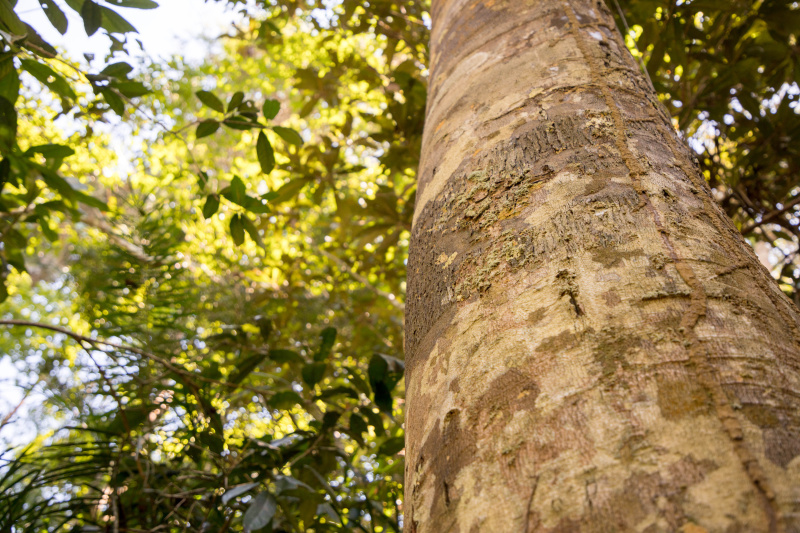
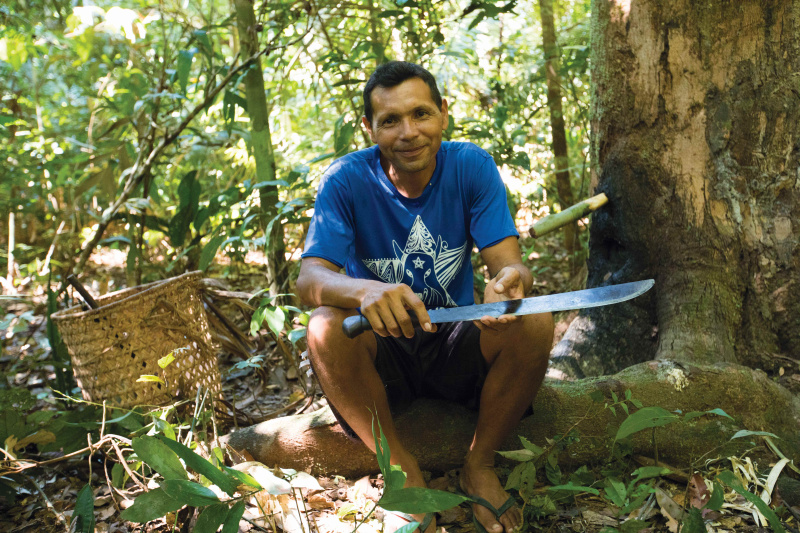
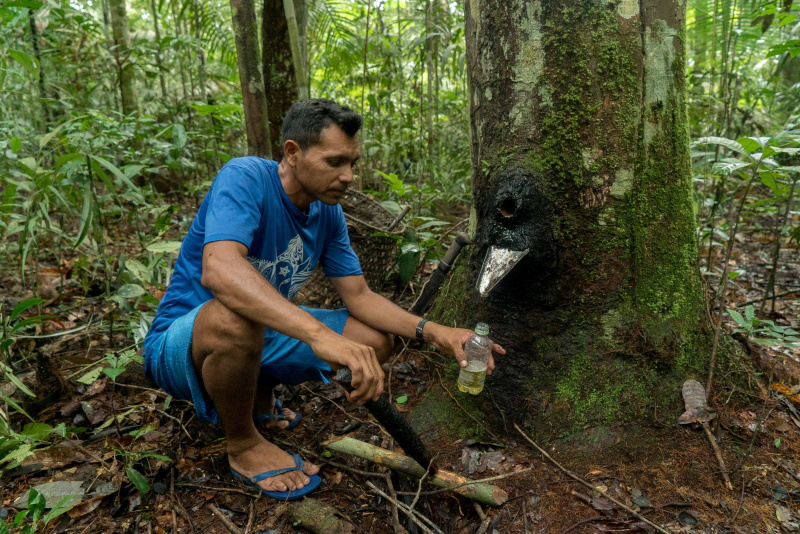
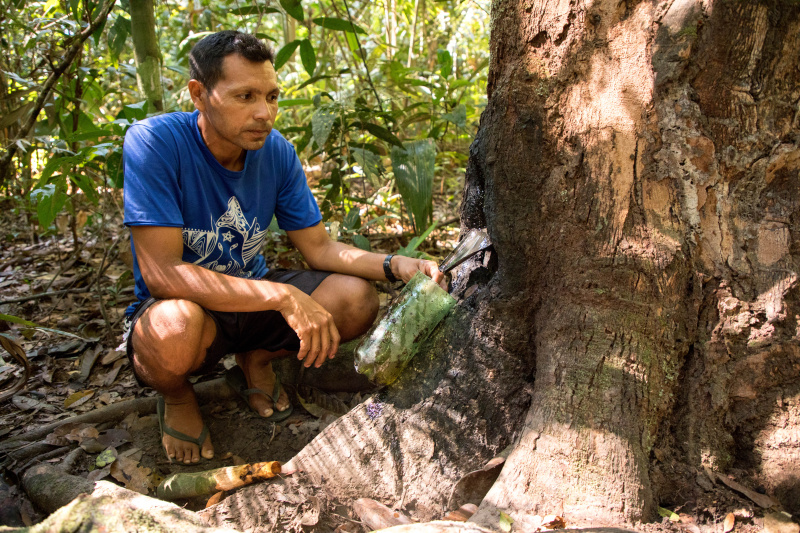
The essential oil is obtained by steam distillation from the oleoresin of the Copaiba tree. Copaiba trees are treated in a similar way to maple trees used for syrup: the tree is tapped to extract the oleoresin. The Copaiba trees of the Amazon are inaccessible for six months because of the weather, as the rainy season runs every year from January to June. During this time, rivers and tributaries rise by an average of up to 6 metres, so Copaiba trees can only be reached by boat.
When a tree is tapped for the first time, it initially provides what is called a base amount of oleoresin. The hole is then sealed, and the tree is tapped again once or twice a year. The amount of oleoresin produced by a Copaiba tree depends on the diameter of the tree, the size of its canopy and its position in the jungle canopy, but each tree can produce between 2 and 6 litres of oleoresin per year. A Copaiba tree can live for up to 400 years and can grow to more than 30 metres in height.
The doTERRA team works with local harvesting families who live along the Amazon River in Brazil. These families are used to travelling by boat to reach neighbours and nearby settlements. Each family cares for several trees, following a tradition that has been passed down for generations.
Helping people: creating jobs
The rural communities of the Amazon are among the poorest regions in Brazil. Amazonas is Brazil's fourth poorest state, where around 17 percent of the 3.6 million inhabitants live below the poverty line. Rural populations in Brazil have some of the highest poverty rates, partly because of the lack of support available to smallholder farmers.
By sourcing Copaiba oleoresin in Amazonas state, the doTERRA team supports the livelihoods of at least 3,000 harvesters. Although these harvesters previously had buyers, they were not guaranteed a fair market price for their products, and sales were irregular. With dōTERRA, these harvesters now receive a regular, reliable, pre-agreed fair price for their product.
- 2019 Dental Project ($26,920)
- 2020 Covid Relief – Food Packages ($18,240)
- 2021 Covid Relief – Medical equipment and healthcare units
- In 2019, the doTERRA Healing Hands Foundation (dHHF) funded a dental clinic for 350 residents in seven remote Copaiba-harvesting communities to address urgent dental-care needs.
During the Covid-19 pandemic, dHHF worked with Copaiba sourcing partners to provide support to local hospitals and healthcare units, as well as essential supplies for families and individuals in the state of Para. Equipment and materials were distributed to two hospitals and 24 healthcare units in the municipalities of Oriximina, Faro and Terra Santa.
In cooperation with our sourcing partner, the doTERRA Healing Hands Foundation also supported a food-security initiative, providing essential food items such as powdered milk and beans, as well as hygiene products such as soap and detergent. These packages were delivered to a total of 450 families, approximately 2,250 people, across seven harvesting areas.
Source: https://www.sourcetoyou.com/en/stories/story/copaiba
Dental care for village residents - video